
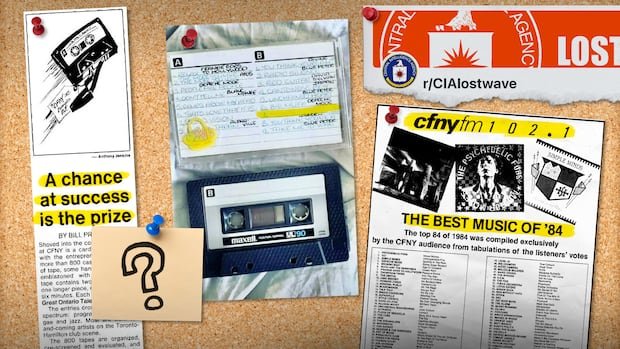
Over 40 years ago, an unknown person captured a song from the radio onto a cassette tape. This action, common in the 1980s, has led to a peculiar situation where all details about the song have vanished, giving rise to what online investigators term a lostwave – a melody with no accompanying information. The track, currently identified as “CIA,” remains shrouded in mystery, with no knowledge of its performers, recording location, or true title.
Online enthusiasts have dedicated years to unraveling the origins of this enigmatic tune, with the search now extending to the Waterloo region in southern Ontario. Joe Gaschler, a forum moderator on Reddit focused on unearthing lostwave song details, described the song as a “42-year-old Canadian musical cold case.” He highlighted the collective efforts of countless individuals delving into the song to uncover clues and engage in discussions with amateur music detectives.
Key findings indicate that the song was broadcast on CFNY-FM, now known as 102.1 The Edge, and potentially recorded onto tape in the mid-1980s, possibly around 1984. Despite these scant details, the song’s sound is reminiscent of typical mid-1980s vibes, evoking memories of bands like A Flock of Seagulls, Platinum Blonde, The Cure, The Romantics, or Duran Duran.
The quest to identify the source of “CIA” gained momentum in 2020 when the song was first shared on YouTube by user DJFormaldehyde. Since then, various individuals, including renowned broadcaster Alan Cross, have joined the search, reaching out to former CFNY-FM personnel and musicians for insights. Despite extensive efforts, the mystery surrounding the song persists, leaving many intrigued by its unresolved origins.
The online community dedicated to solving the enigma surrounding “CIA” has invested substantial time analyzing vocals, instruments used, and historical context to no avail. Kate Galloway, an assistant professor of popular music at Wilfrid Laurier University, emphasized the unique challenge posed by the song’s anonymity in an era where music identification is seemingly effortless.
While the search for “CIA’s” origins continues, the collaborative effort among enthusiasts fosters a sense of camaraderie and nostalgia, underscoring the enduring appeal of unresolved musical mysteries. Gaschler and others remain optimistic about eventually unearthing the band behind “CIA,” eager to recognize their talent and the song’s enduring popularity among fans.

