
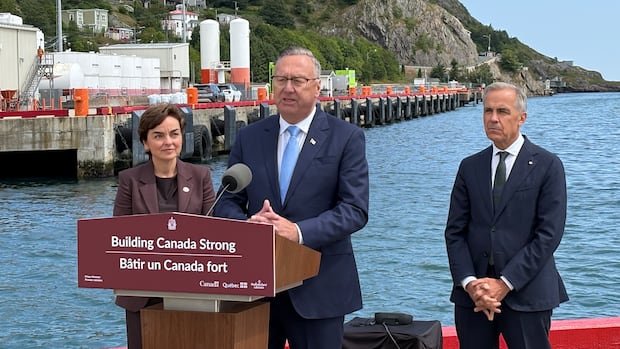
Ottawa has announced the largest investment in clean energy ever seen in North America. Prime Minister Mark Carney, along with N.L. Premier Tony Wakeham and Quebec Premier Christine Fréchette, unveiled a groundbreaking deal for Churchill Falls and other power projects in Labrador.
The agreement includes $10 billion in funding from Ottawa to enhance the Churchill Falls generating station, develop the Gull Island hydroelectric project, construct transmission lines, and establish a 2,000 MW onshore wind energy project in Labrador. These initiatives, valued at nearly $70 billion, will substantially increase Churchill Falls’ capacity, providing enough electricity to power homes in Toronto, Montreal, and Vancouver combined.
Carney emphasized the significance of tripling Churchill Falls’ current generation capacity to 14,000 megawatts, exceeding the output of major energy facilities. The projects are expected to generate 23,000 jobs and offer significant economic benefits to Newfoundland and Labrador.
The deal aims to provide Quebec with a reliable power source while enabling N.L. to leverage its natural resources to address financial challenges. Additionally, N.L. residents will benefit from a 15% rebate on their electricity bills, amounting to an average annual savings of $351 per household.
Describing the agreement as a “win-win-win,” Wakeham highlighted the improved terms compared to the previous memorandum signed in 2024. The updated deal is projected to increase N.L.’s net present value to $49 billion by 2027.
The agreement secures transmission access for N.L. to sell up to 985 megawatts of electricity through Quebec, enhancing market opportunities. Carney also announced federal support for the Gull Island project and hinted at collaborative investments with the Innu Nation in a Labrador wind project.
The expansion of Labrador’s mining sector is expected to benefit from the surplus power, with Ottawa allocating funds for infrastructure development. However, uncertainties loom over the deal’s future due to the upcoming Quebec election, with Fréchette defending the agreement’s benefits for both provinces.
Overall, the agreement signifies a significant milestone in North American clean energy investments, promising economic growth and sustainable energy solutions for the region.

