
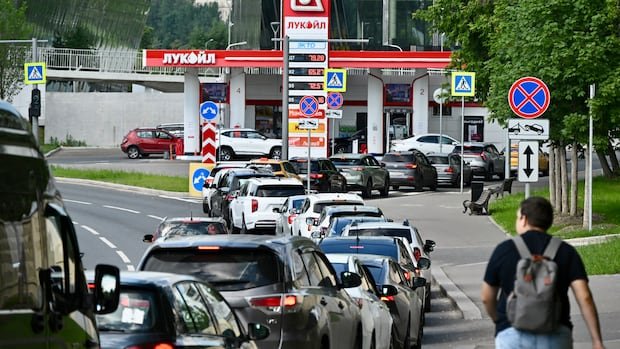
Over the weekend, videos circulating on social media depicted long queues at Russian gas stations, with drivers becoming increasingly agitated, even resorting to altercations in parking lots. In response to the growing panic and concerns about shortages resulting from Ukrainian strikes, President Vladimir Putin sought to reassure the public. Despite Putin’s attempts to downplay the situation, the Russian government’s actions reflect the severity of the crisis. Measures such as the prohibition of gasoline and jet fuel exports have been implemented, and there are discussions about potentially importing oil products from other nations, as confirmed by Kremlin spokesperson Dmitry Peskov.
The decision by Russia, a significant oil exporter globally, to consider importing refined products from abroad, a departure from its usual practices, underscores the impact of the sustained strikes by Ukraine on the country’s refining capacity. Ukraine’s relentless attacks on Russian refineries over the past three months, including striking facilities near Moscow, have led to significant disruptions. The International Energy Agency described the level of disruption as unprecedented, resulting in a notable decrease in Russia’s oil production and a substantial reduction in gasoline output compared to the previous year.
The fuel scarcity has triggered various repercussions, such as fuel restrictions, gas station closures, and lengthy queues at pumps across many regions. The situation has fueled public frustration and prompted widespread social media discussions. Notably, there has been a resurgence of a meme referencing a past statement by late U.S. Senator John McCain, who likened Russia to a “gas station masquerading as a country.” This sentiment has resurfaced, with individuals highlighting President Putin’s previous remarks about Russia’s evolution beyond being merely a fuel provider.
As the fuel crisis escalates, negotiations for fuel imports from undisclosed countries are underway. Reports suggest that Russia may consider allowing temporary production of lower-quality fuel and facilitating lower-quality imports to address the shortages. Additionally, efforts are being made to educate motorists on the benefits of not constantly maintaining a full tank.
The fuel shortage has prompted numerous regions to implement fuel purchase limits, with Crimea declaring a state of emergency due to the gasoline scarcity. Individuals like Dmitry from Moscow have adapted to the situation by adhering to the imposed limits and observing changes in gas station operations, suspecting intentional supply constraints to inflate prices. The ongoing crisis poses further economic challenges for Russia, potentially exacerbating its existing financial struggles.
As authorities strive to alleviate the fuel crisis, the energy sector is racing to restore refineries in anticipation of future Ukrainian attacks. Recent developments indicate that both Russia and Ukraine are gearing up for potential escalations in the conflict, with Ukraine’s President approving a 40-day operation to target strategic sites and pressure Russia to end the ongoing conflict.

