
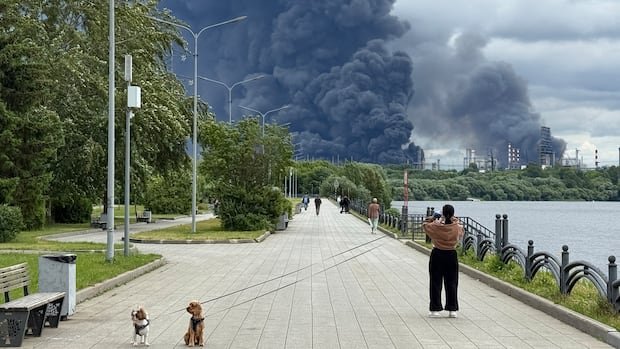
Ukraine conducted a significant attack on Moscow, targeting a major refinery and creating thick black smoke over the city. Prior to this attack, the impact of Kyiv’s escalating drone operations was strongly felt in Russia. In Crimea, where Russia annexed the region in 2014, the governor imposed a nighttime ban on motorcycles and scooters due to the noise resembling drones flying overhead.
The peninsula experienced fuel shortages, empty gas pumps, and supply route disruptions following Ukrainian strikes aimed at cutting off resources. While Moscow has not yet faced fuel shortages, experts warn that Ukraine’s actions are putting pressure on Russia’s energy sector. The director of the Kyiv-based Energy Industry Research Center emphasized the role of Moscow’s residents in ending the conflict.
The recent drone attack on Moscow, involving around 200 drones, occurred while Russian President Putin was hosting foreign leaders in Kazan, resulting in injuries and fatalities. The assault damaged buildings, a mall, and caused chaos in the city. The refinery, owned by Gazprom Neft, was a vital fuel source for the capital before being struck twice in the same week.
Following the attack, Russia’s fuel market faced challenges, with the CEO of Rosneft acknowledging the situation and ensuring supply to essential facilities. The Kremlin confirmed the drone strikes and stated that measures are being taken to address the aftermath. In Crimea, fuel rationing was implemented due to repeated targeting of infrastructure, including railway bridges.
Reports of fuel shortages in regions like Dagestan prompted Russia, a major oil producer, to consider importing fuel from Asia to mitigate the deficit. The ongoing attacks on Russia’s energy infrastructure are forecasted to lead to sustained fuel shortages if they persist for another few weeks. Ukrainian manufacturers like Fire Point have been targeting key sites in Moscow and logistical routes crucial for Russia’s military operations, intensifying the pressure on the Russian army.
The situation has brought the war closer to Moscow, with Fire Point emphasizing the impact on Russia’s military capabilities. The company’s drones have been instrumental in disrupting Russian operations and logistical support, highlighting the evolving dynamics of the conflict.

