
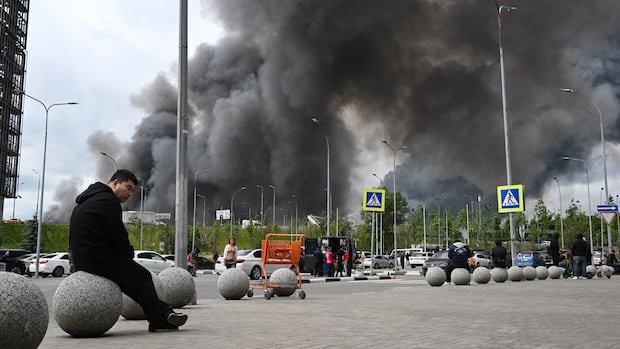
Last week, residents of Moscow witnessed dark smoke looming over the city while Ukrainian drones flew above. This marked the largest drone attack by Ukraine on the Russian capital since the full-scale invasion began in 2022. The onslaught led to numerous flight delays and cancellations, with a major oil refinery on the outskirts of the city repeatedly targeted and set ablaze.
In response to the attacks, Ukrainian President Volodymyr Zelenskyy stated, “If Ukraine is going to burn, your Moscow will burn too.” These strikes have brought the war closer to home for many Russians, disrupting daily life and undermining their sense of security.
Experts suggest that these attacks could heighten domestic concerns as the conflict drags on. The impact of this discontent on Russian President Vladimir Putin’s hold on power or potential for further escalation remains uncertain.
Historian Anne Applebaum pointed out that Muscovites experienced significant drone campaigns for the first time since the war began. She emphasized that these attacks may not immediately end the conflict but could shift the mood among influential figures who have the ear of President Putin.
Despite the visible effects of the strikes, no footage of the attacks aired on evening news in Russia, and there were no alerts issued to residents. The lack of information and preparedness left some Moscow inhabitants feeling anxious and unprotected.
In addition to Moscow, other Russian cities have also been targeted in recent Ukrainian strikes. These actions have caused power outages in Russian-held Crimea and disrupted energy infrastructure in central and southern Russia. Sanctions have been imposed on the Crimean Peninsula as a result of these attacks.
Prominent Kremlin allies have criticized Russians sharing images of the Ukrainian assaults, with some labeling them as traitors. This backlash underscores the ongoing tension within Russian society as the conflict persists.
As support for the war wanes in Russia, some nationalist figures have begun criticizing Putin’s handling of the situation. However, it is crucial to note that opposition to Putin does not necessarily equate to a rejection of the war itself.
The potential for widespread protests poses challenges for Putin, who may resort to repressive measures to maintain control. The risk of further escalations and heightened ruthlessness in the conflict looms, raising concerns about the impact on civilians in Ukraine.
Putin, who is wanted by the International Criminal Court for alleged war crimes, faces mounting pressure as the war continues. The evolving dynamics could either push him towards compromise or fuel greater aggression, with the ultimate outcome remaining uncertain.

