
Health Canada has revealed that the Northwest Territories (N.W.T.) is poised to receive more than $144.8 million in government funding to enhance healthcare services in the region. Federal Health Minister Marjorie Michel emphasized the importance of a functional healthcare system for all Canadians. This announcement marks the N.W.T. as the first jurisdiction in Canada to renew its bilateral agreement under the federal government’s ten-year national health accord.
At a news conference in Ottawa, Minister Michel, alongside Minister of Crown-Indigenous Relations Rebecca Alty and N.W.T.’s interim health and social services minister Lucy Kuptana, discussed the significance of federal-territorial partnerships tailored to the northern region to deliver effective healthcare services.
The funding comprises two main components. The first, called the Working Together initiative, aims to enhance healthcare accessibility by allocating $51.2 million over seven years for physician training, recruitment, and the integration of primary health-care teams. This funding will also support mental health and substance use services, including culturally appropriate programs for mental wellness and suicide prevention.
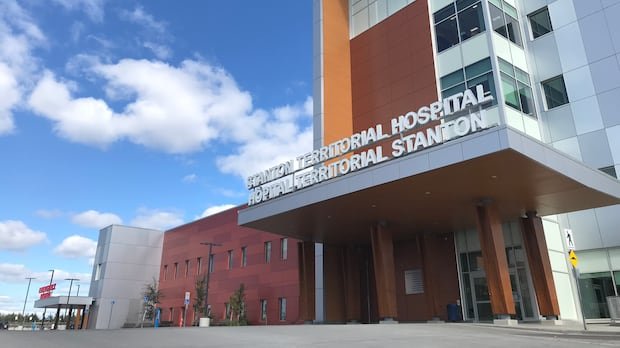
The second funding stream, the Build Communities Strong Fund, focuses on infrastructure development. The federal government plans to invest $70.2 million in 16 health infrastructure projects across 12 communities, with an additional $23.4 million contributed by the territory. Notable projects include a new MRI machine at Stanton Territorial Hospital, a CT scanner in Inuvik, new health cabins in remote communities, a community wellness center in Délı̨nę, and specialized spaces for an Indigenous clinic.
Minister Kuptana highlighted the importance of providing services locally to preserve the well-being of northern families during medical care. She emphasized that enhanced local diagnostic capabilities would alleviate the need for costly medical travel to southern provinces.
Regarding mental health and addictions funding, a dedicated funding stream is set to expire, with these programs’ funding being integrated into the territory’s main bilateral health agreement in the future. Minister Kuptana acknowledged the critical need for expanded support for mental health and addictions programs, particularly community-led and land-based aftercare services to address the ongoing addictions crisis in the North.
The territory commits to yearly public reporting on its progress towards established health targets as construction and program planning advance.

