
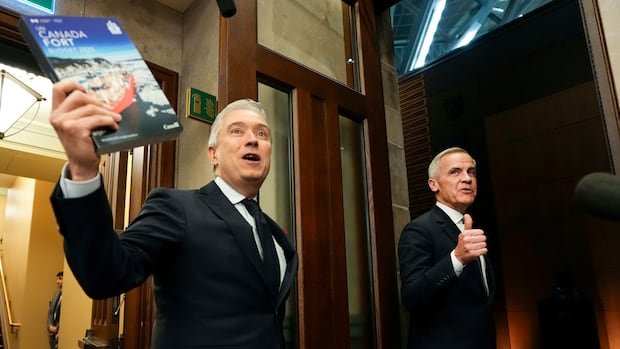
Finance Minister François-Philippe Champagne has announced that the government will present its new budget on November 5th. This will mark the second budget introduced during Prime Minister Mark Carney’s tenure and the second consecutive fall budget. Previously, the federal budget was typically presented in the spring, but Carney shifted to a fall schedule last year.
Champagne revealed the budget timeline during Tuesday’s question period. The government’s spring economic update, released in April, indicated a reduced deficit for the previous fiscal year compared to initial forecasts. The original 2025 budget forecasted a deficit of $78.3 billion for 2025-26, but the April update revised it down to $66.9 billion, partly due to increased oil prices.
Simultaneously, the Parliamentary Budget Office (PBO) revised its economic growth outlook for this year and the next. The PBO now projects a real GDP growth of 0.9% for this year and 1.5% for 2027, down from earlier estimates of 1.1% and 1.6%, respectively, due to trade uncertainties and additional measures affecting economic growth.
Additionally, the PBO anticipates a budgetary deficit of $63.3 billion in the 2026-27 fiscal year, peaking at $70.2 billion in 2027-28. The deficits are projected to be $3 billion higher annually from 2026-27 to 2030-31 compared to the previous forecast, primarily due to increased spending measures outweighing revenue growth.
Regarding the budget balance, although the latest projections do not show a path to overall budget balancing, Carney aims to achieve an operating budget balance by 2027 instead of the previously targeted 2028. However, the PBO’s report suggests that the operating balance may be reached a year later, in fiscal 2029-30.
The upcoming budget presentation is significant as inflation rates have been on the rise in recent months. Canada’s annual inflation rate reached 3.1% in September, with higher fuel prices being a contributing factor. Excluding gasoline, consumer prices rose by 2.2% year-over-year in September. The PBO predicts that the Bank of Canada will likely start raising its policy rate in early 2027 to manage inflation expectations, aiming for 2.75% by mid-year.
Inflation is expected to remain elevated in 2026, averaging 2.8%, before easing to 2.4% in 2027, primarily driven by higher energy prices. The Bank of Canada’s inflation target range is between 1% and 3%.

