
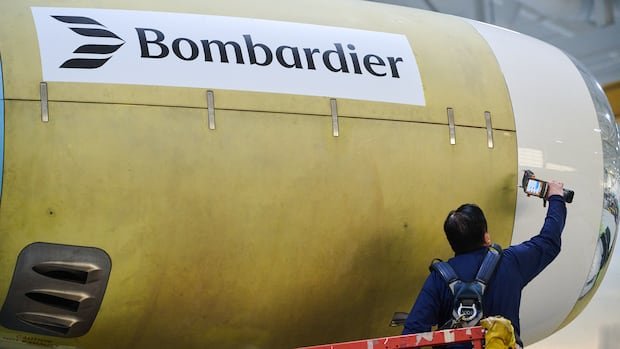
U.S. President Donald Trump has decided against his initial plan to prohibit the sale of Bombardier planes in the United States, easing concerns in the aerospace industry. This move comes after tensions escalated and tariffs were increased during the recent trade war.
During a campaign rally on Monday night, Trump expressed a shift in his perception of Bombardier, acknowledging the company’s presence in Kansas and its contribution to the local economy. He assured the crowd in a Wichita suburb that he would support the company and its workforce, emphasizing the importance of maintaining jobs.
Wichita, where Bombardier employs 1,500 workers, is a significant location for the company’s defense division. Across various states, including Kansas, Texas, and California, Bombardier has around 3,500 American employees.
Kansas, traditionally a Republican stronghold, has become a battleground for political control as the upcoming midterm elections approach. Trump mentioned that a conversation with Kansas Republican Senator Roger Marshall influenced his decision to retract the threat against Bombardier. Recent polls show a close race between Marshall and Democratic candidate Adam Hamilton in a state that has not elected a Democrat to the Senate since 1932.
In a previous social media post on September 7, Trump had warned that Bombardier would no longer be permitted to sell aircraft in the U.S. unless it relocated its manufacturing operations to the country. Despite the potential impact on American workers, Trump insisted on the requirement for domestic production.
In response to the situation, Bombardier highlighted its substantial contributions to the U.S. economy, including payments to American suppliers and investments in workforce development. The company emphasized its commitment to creating skilled jobs and supporting the local communities.
Despite the uncertainty caused by Trump’s initial threat, Bombardier shares experienced a positive uptick following the decision reversal. The aerospace industry’s interconnectedness across borders underscores the importance of maintaining a collaborative manufacturing environment.
Analysts point out that a ban on Bombardier planes in the U.S. market would have adverse effects on American parts suppliers and jet operators. The potential disruptions and revenue losses underscore the intricate relationship between Bombardier and the American aerospace sector.
Trump’s confrontational stance towards Bombardier coincided with Ottawa’s retaliatory tariffs on American goods, further escalating trade tensions between the two countries. This recent incident marks the second time this year that Bombardier has faced scrutiny from the president, highlighting the ongoing trade complexities between the U.S. and Canada.

