
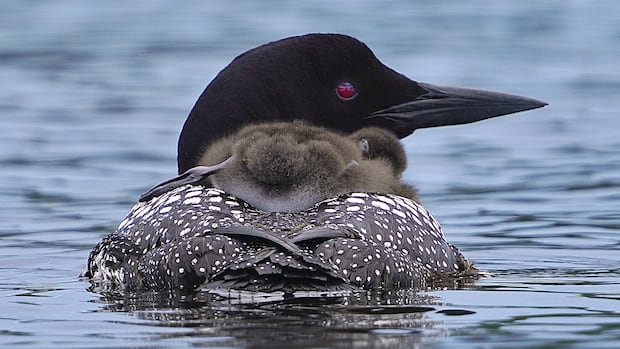
A chilling sound often heard as darkness falls in the summer across Canada, signaling a quietude that blankets marshes and lakes in cottage country, is the haunting call of the common loon. Recent research suggests that the common loon population in North America is facing significant declines, with Prairie and Atlantic regions experiencing some of the most severe losses.
According to a study published in the journal FACETS, the decline in the common loon population is alarming in its extent. Canada hosts 94% of the global common loon population, estimated at around 254,000 breeding pairs. These iconic birds have encountered various threats in the past, including exposure to substances like DDT, lead-based fishing gear, and mercury.
The latest research, conducted by a team of nearly two dozen experts from Canada and the U.S., points to climate change as a potential factor behind the decrease in loon chicks. Analyzing data from over 3,400 lakes spanning several decades, the study reveals significant declines in chick observations in many regions.
The study indicates a notable drop of 40% in loon chick productivity in ten out of twelve study areas, with Alberta, Saskatchewan, Manitoba, and Canada’s East Coast experiencing the most considerable declines. Quebec and Maine were the only regions where chick productivity remained relatively stable.
Climate change is identified as a primary driver of these declines, affecting the availability of fish, nesting habitats, and water quality for loons. Human activities such as shoreline development and environmental contaminants exacerbate these threats. The changing weather patterns, increased rainfall, and storm events associated with climate change pose additional risks to loons and their habitats.
The study underscores the importance of conservation efforts to safeguard the common loon population. Recommendations include using lead-free fishing gear, minimizing disturbances to loons while boating, and preserving natural shorelines. Citizen science projects like the Canadian Lakes Loon Survey offer opportunities for individuals to contribute to loon conservation and raise awareness about the impact of climate change on wildlife.

