
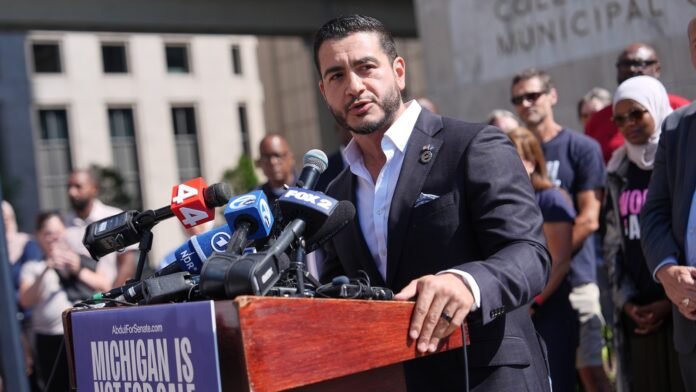
Michigan is poised to secure an early place in the 2028 presidential primary lineup. The recent win by Abdul El-Sayed in Michigan’s Democratic Senate primary, coupled with the state’s potential positioning in the 2028 presidential nomination calendar, is expected to amplify Arab American representation within the Democratic Party, as indicated by key party members.
With nearly 300,000 Arab Americans residing in the state, Michigan could once again feature early in the nomination calendar, following South Carolina, Nevada, New Hampshire, New Mexico, and then Virginia. This arrangement, tentatively approved by Democratic National Committee leaders, reflects the ongoing discussions surrounding Michigan’s role and the dynamics between the Middle East, U.S., and Israel within the Democratic Party.
Should El-Sayed, who campaigned on discontinuing U.S. aid to Israel, emerge victorious in the November battleground, his influence could be pivotal for potential presidential candidates seeking support in the 2028 race. Following his primary success, El-Sayed garnered endorsements from former Vice President Kamala Harris, California Governor Gavin Newsom, and received support from other prominent figures like former Transportation Secretary Pete Buttigieg, Senator Mark Kelly, and Maryland Governor Wes Moore.
While Michigan occupied an early spot in the 2024 primaries, some progressives argue that the political landscape has significantly evolved since then. The upcoming 2028 cycle is anticipated to be fiercely competitive, with numerous Democrats already contemplating a presidential bid, setting the stage for a dynamic and engaging political environment.
The decision to move Michigan to an earlier primary position signifies a notable shift, reflecting a departure from its traditional post-Super Tuesday slot. Basim Elkarra, executive director of the Council on American-Islamic Relations’ political arm, emphasized the importance of this shift, stating that it will demand greater attention and acknowledgment of their community’s significance in shaping electoral outcomes.
As potential candidates start outlining their stances on U.S. policy towards Israel, there is a growing emphasis on the evolving views within the Democratic Party. Recent data indicates a shift in sentiment, with a higher percentage of Democrats expressing concerns about the level of U.S. support for Israel, signaling a departure from previous consensus.
Looking ahead, the Michigan primary is poised to serve as a litmus test for candidates’ alignment with voter sentiments on critical issues. The state’s diverse demographics, including its sizable Black and Latino populations, alongside a robust union presence, underscore the necessity for candidates to engage with a wide spectrum of communities and address multifaceted concerns.
Ultimately, as the electoral landscape evolves, the potential for finding common ground remains a key consideration for party unity and effective leadership. DNC members and party figures stress the importance of identifying transformative leaders who can navigate differing viewpoints and foster unity to address shared challenges effectively.

