
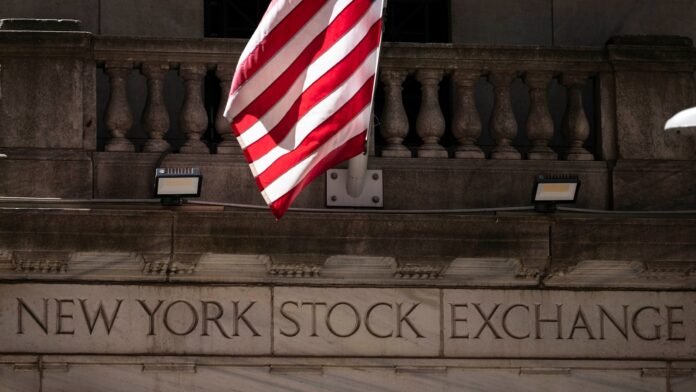
U.S. stock markets experienced a slight decline from their recent highs, while oil prices remained volatile due to uncertainty surrounding the resumption of crude oil flow post the conflict with Iran. The S&P 500 retreated by 0.3%, marking a second consecutive modest drop since reaching a record peak last Friday. Similarly, the Dow Jones Industrial Average slipped by 0.3%, shedding 184 points, and the Nasdaq composite fell by 0.6%.
The oil market witnessed more significant movements as the price of Brent crude surged above $90 per barrel briefly in the morning before retracting below $87. Eventually, it settled at $88.91, showing a 1.4% increase from the previous day. These fluctuations have become common following the U.S. and Israel’s military actions against Iran in late February, resulting in the closure of the critical Strait of Hormuz and causing disruptions in oil supply chains.
Rising oil prices have exacerbated inflation concerns, pushing the average price of a gallon of regular gasoline to $4.01, as reported by AAA. This is an increase from less than $3.14 a year ago, although it is slightly lower than the previous week’s average of nearly $4.09.
Market attention is now focused on the upcoming release of the latest inflation data by the U.S. government on Wednesday. Economists anticipate that while inflation levels remain high, there might have been a slight deceleration to 3.4% in July from 3.5% in June. This data could influence the Federal Reserve’s decision on whether to raise interest rates to curb inflation. The Fed members are divided on this matter, with some advocating for rate hikes to control price increases, which could, in turn, impact economic growth.
Traders are currently speculating on the possibility of a rate hike by the Fed at its next meeting in September, which would be the first increase in over three years. This move could potentially clash with President Donald Trump’s preference for lower interest rates. Treasury yields have surged due to escalating oil prices and inflation fears, leading to long-term mortgage rates reaching a one-year high.
Despite these challenges, companies have been surpassing analysts’ expectations, driving positive sentiment on Wall Street. Earnings per share for S&P 500 firms are projected to be 50% higher compared to the previous year, reflecting robust corporate performance and contributing to the recent record-setting trend in U.S. stock markets.
In global stock markets, indexes showed mixed performance in Europe and Asia, with Hong Kong’s Hang Seng experiencing a notable 1.1% decline.
___

