
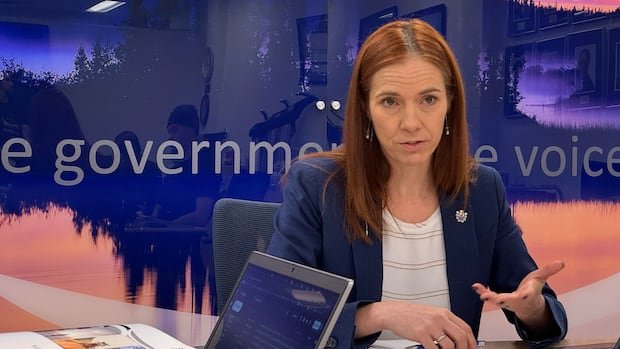
Northwest Territories Finance Minister Caroline Wawzonek has refrained from committing to additional relief measures for residents bracing for a looming surge in winter fuel prices. However, she assured that she would push for assistance from the federal government. The issue was raised during a session at the Legislative Assembly where several MLAs queried whether she would consider waiving the territorial tax on gas and diesel or implementing emergency measures to assist individuals not currently receiving aid for home heating fuel expenses.
The spike in fuel costs can be attributed to the conflict between the United States, Israel, and Iran earlier this year, which led to a blockade at the critical global oil shipment point, the Strait of Hormuz. Additionally, escalating trade tensions between the U.S. and Canada have contributed to a notable increase in living expenses nationwide. Range Lake MLA Kieron Testart highlighted steps taken by other provinces and the federal government to reduce fuel prices and inquired if the N.W.T. would follow suit by reducing the territorial fuel tax.
In response to Testart’s proposal, Wawzonek dismissed the idea of eliminating the estimated $15 million revenue generated from fuel taxes, stating that such a move would only result in a minimal savings of $8 per average tank. Another MLA, Julian Morse, sought clarification on whether emergency subsidies would be extended to low-income residents not covered by existing programs to alleviate the burden of home heating fuel costs. Wawzonek indicated that such subsidies were not currently being considered, emphasizing the government’s focus on addressing fundamental issues like the North’s dependence on diesel for power generation and the high cost of living, particularly for vulnerable groups such as public housing residents and the elderly.
Regarding electricity costs, Wawzonek acknowledged the likelihood of government intervention to manage expenses due to low water levels affecting the hydro system, leading to increased diesel usage. Despite potential subsidization efforts, she cautioned about the significant costs ahead. Earlier in the day, Wawzonek fulfilled her commitment to advocate for federal support by virtually testifying before the federal standing committee on Indigenous and Northern Affairs about the unique affordability challenges faced in the North. She highlighted the substantial cost disparities in Yellowknife compared to cities like Edmonton and emphasized the disproportionately higher costs in communities outside the N.W.T. capital.
Energy costs were identified as the primary driver of this disparity, with transportation and heating expenses doubling the national average. Wawzonek mentioned that the N.W.T. government already provides more than $18 million in direct annual subsidies to stabilize energy costs for residents. She referenced a recent $2-billion federal initiative aimed at promoting home heat pump installations, noting its inapplicability in the North due to the extreme cold climate. Wawzonek cautioned against implementing broad initiatives without considering the impact on vast territories like Canada’s North, suggesting alternative measures such as biomass, wood stoves, and liquefied natural gas.

