
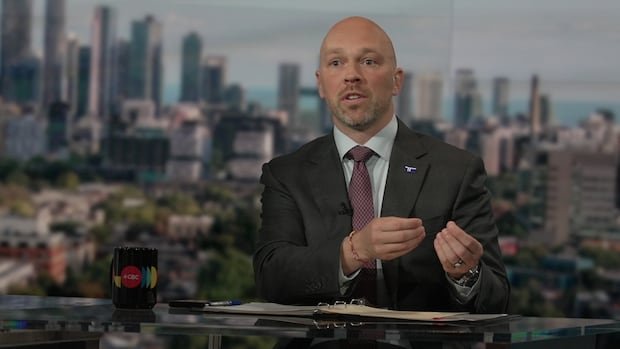
Toronto mayoral candidate Brad Bradford is standing by his strategy to finance various ambitious projects through increased debt. He asserted on Wednesday that if elected, Toronto would maintain its position as the most fiscally responsible and conservative government in North America.
Bradford made these statements just five days ahead of the municipal election, where recent polling indicated he holds a slight lead over the incumbent, Olivia Chow. Throughout his campaign, Bradford has introduced several substantial proposals, such as reducing the land transfer tax for certain Toronto properties, establishing a new public water utility, and recently, upgrading sections of the city’s subway tracks.
In an interview on CBC Radio’s “Metro Morning,” Bradford emphasized his campaign’s emphasis on a grand vision, innovative concepts, and improved implementation within the mayor’s office. However, Chow, who is scheduled to appear on “Metro Morning” on Friday to outline her campaign commitments, criticized Bradford’s plan as irresponsible.
Bradford defended his approach of leveraging more borrowing as a means to retain more funds in the city’s operational budget by reducing allocations to long-term savings and opting for additional debt instead. He stated, “It’s a different strategy, but I believe it is the way forward.”
Proponents of Bradford’s plan argue that it aligns Toronto’s budget practices with those of other governmental levels and refute claims that accumulating more debt is imprudent. Bradford contended, “It’s not equitable to require immediate cash payments for projects that won’t materialize for decades. There’s a valid argument that this approach could expedite project completion and potentially save costs in the long term.”
Critics, including Erin Morrison, a supporter of Chow and a political strategist, raised concerns about the feasibility of Bradford’s promises, highlighting potential service cuts that might be necessary to fund his proposals. Morrison emphasized the challenge of reconciling Bradford’s commitment to a low-tax environment with significant spending pledges.
One of Bradford’s key initiatives involves establishing a public water company by separating Toronto’s water and wastewater services into a distinct public utility entity. While opponents have raised apprehensions about this move potentially paving the way for privatization or compromising control over water rates, Bradford dismissed these notions. He assured that private investment in the utility would be prohibited, and he expressed confidence that the change would result in cost savings for residents.
Despite Bradford’s confidence in his plans, a coalition of incumbent council members, including Chow, have opposed his water utility proposal. Additionally, concerns have been raised about the potential implications for Toronto’s governance structure and the sustainability of Bradford’s approach in the long run.
As the mayoral race intensifies, Bradford and Chow are among over 50 candidates vying for the city’s top position. Voters can access a comprehensive list of candidates on the city’s website and track the promises of the leading contenders through CBC’s promise tracker. Election day is scheduled for October 26, with voting hours from 10 a.m. to 8 p.m.

