
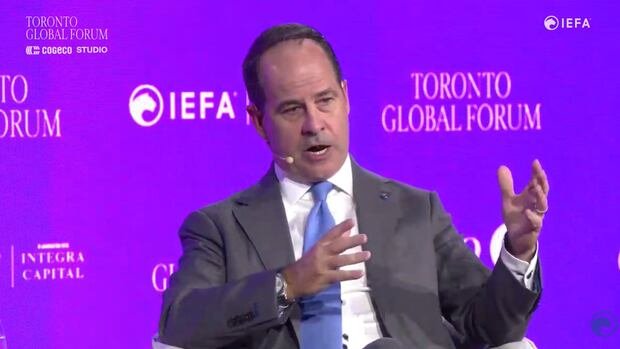
Bank of Montreal’s CEO, Darryl White, has raised concerns about the trustworthiness of artificial intelligence agents when it comes to handling personal banking data. During the Toronto Global Forum, White emphasized the risks posed by AI advancing faster than regulatory frameworks and protective measures. This comes after RBC’s CEO hinted at the possibility of restricting Meta’s popular Muse AI agent from accessing client data within the bank.
White highlighted the issue of individuals being too comfortable sharing personal information with various agents in the e-commerce ecosystem that has developed over the past 25 years. He cautioned against divulging sensitive data such as banking credentials, credit card details, social insurance numbers, and PINs, stressing that these are inadequately safeguarded. White emphasized the need for enhanced public education on these matters.
Canada’s major banks have heavily invested in artificial intelligence technologies in recent years, with BMO leveraging AI in its insurance division to expedite underwriting decisions to just 10 seconds, a significant improvement from the previous industry norm of 28 days.
Meanwhile, several financial institutions, including JPMorgan Chase & Co. and Charles Schwab, have taken steps to restrict or regulate external AI agents’ access to client data. RBC’s CEO, Dave McKay, expressed considerations about potentially blocking Muse from retrieving client information, emphasizing the importance of balancing consumer needs with system privacy and security.

