
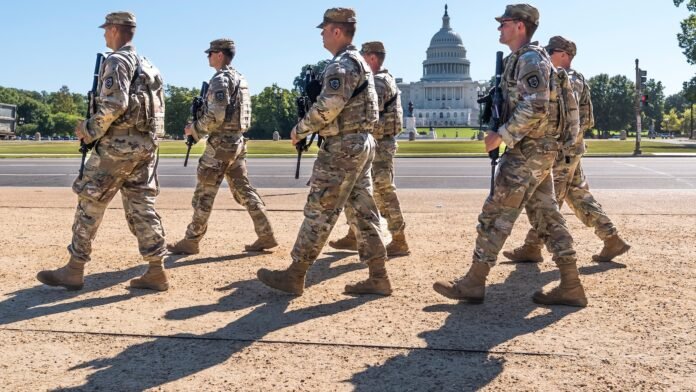
Residents and officials in Washington are expressing concerns over President Donald Trump’s decision to extend the National Guard deployment in the city. Initially introduced as a response to a crime emergency, the deployment has now been prolonged until January 2029, raising questions about the necessity and impact of having troops in the nation’s capital. Critics view this move as an attempt by the federal government to impede the city’s autonomy, particularly given Washington’s predominantly Democratic demographic.
The prolonged presence of the National Guard in Washington has sparked debate among residents and new local officials. The cost of extending the deployment until 2029 is estimated to be around $1.4 billion. Despite the administration’s claims of increased safety and beautification, some residents feel that the continued military presence is unwarranted and oppressive.
While crime rates have reportedly decreased during the deployment, there are differing opinions on whether this is solely attributed to Trump’s initiatives or existing local efforts. The city’s unique governmental structure, under the Home Rule Act, grants the president significant control over law enforcement and the National Guard, limiting the ability of local leaders to challenge federal interventions.
As the city prepares for upcoming elections, candidates advocating for Washington’s autonomy and statehood have gained traction. Democratic primary winners, such as Janeese Lewis George and Robert White Jr., aim to counter Trump’s influence and the prolonged deployment through grassroots mobilization and strategic political efforts.
Despite the challenges posed by the National Guard deployment, outgoing Mayor Muriel Bowser has maintained a diplomatic approach to preserve the city’s independence. The ongoing debate over Washington’s governance and the presence of military forces on its streets highlights the complex relationship between federal oversight and local autonomy in the nation’s capital.

