
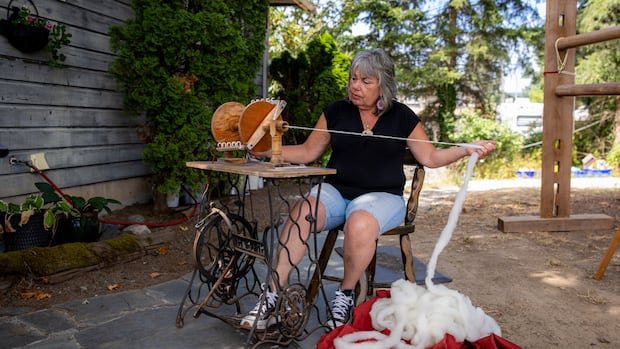
Renowned Coast Salish weaver Myrna Crossley views a blanket as more than just wool – it symbolizes a deep connection to the land, her culture, and ancestors. Living on the Tsartlip reserve within W̱SÁNEĆ territory for over three decades, Crossley has dedicated the last five to six years to weaving full-time.
With ancestral roots in the Lək̓ʷəŋən-speaking Songhees community, Crossley embarked on her weaving journey following a workshop in 1993 under the guidance of Rita Bob from Pauquachin. Embracing her heritage, she personally crafts dyes, extracting unique hues from natural sources found in the environment.
Favoring nettle for its spiritual significance and versatile properties, Crossley also utilizes barks, arbutus, cedar, maple, and various mushrooms to create her dyes. Reflecting her deep bond with nature, she constantly explores new sources, both Indigenous and non-Indigenous.
Recently, Crossley showcased her artistry through notable projects like a 12×5 feet piece displayed at the University of Victoria and exhibits at the Chicago Museum. Engaged in diverse cultural initiatives, including fashion shows and community weaving, she aims to convey the essence of land connection and cultural heritage through her blankets.
Each weaving project holds a profound significance for Crossley, requiring a clear mind and spiritual intention to infuse positive energy into every piece. Delving into the dyeing process, she meticulously notes the variables influencing color outcomes, emphasizing the importance of environmental harmony in her craft.
As climate shifts impact traditional practices like berry gathering, Crossley adapts her techniques to align with nature’s rhythms. From dye preparation to loom setup, she meticulously orchestrates each step, infusing scientific precision with artistic intuition to create vibrant, meaningful blankets.
Weaving serves as Crossley’s sanctuary, connecting her to ancestral weavers like her fourth-generation grandmother, Swanimia, whose legacy inspires her craft. Upholding cultural traditions and ancestral teachings, Crossley’s weaving embodies a timeless link to her land, culture, and familial heritage.

