
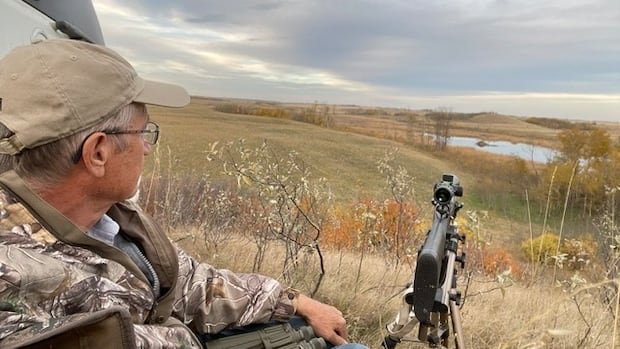
Ken Erickson, a Saskatchewan hunter since 1971, decided to halt hunting certain animals due to concerns about chronic wasting disease. With the end of a provincial testing program, other hunters are contemplating similar decisions.
The Saskatchewan government opted to discontinue its chronic wasting disease testing initiative due to low participation from hunters. This disease impacts the nervous systems of cervids like deer, elk, and moose. Despite no human cases reported, Erickson, whose wife is immunocompromised, prioritizes his family’s safety and avoids any potential risks associated with the disease.
Born in Thunder Bay, Ont., Erickson, who moved to Regina in the ’70s, has extensive hunting experience in the prairies. While he now mainly hunts birds due to challenges with big game hunting, he expressed interest in hunting deer if not for the CWD threat. He highlighted his concerns about the decision, which he believes is more politically driven than science-based.
Darrell Crabbe, the executive director of the Saskatchewan Wildlife Federation, criticized the program’s termination, emphasizing its importance in ensuring safe meat consumption for hunters. The government plans to monitor wildlife health and populations using alternative methods following the program’s closure.
Notably, chronic wasting disease has been identified in 63 of Saskatchewan’s 83 wildlife zones. Mandatory testing was enforced in specific zones, with samples due for processing until Oct. 31. However, voluntary submission zones will no longer undergo testing, sparking concerns about disease spread and targeting of younger animals.
Ryan Brook, a professor at the University of Saskatchewan, expressed surprise at the program’s sudden end, emphasizing the need for program improvements rather than termination. He stressed the significance of the program’s data for wildlife management.
The decision’s financial implications and potential hunting community backlash were noted by Crabbe, who urged the government to address transmission issues beyond data collection. Calls for program reinstatement and enhanced wildlife management coordination for 2027 were made by stakeholders like Erickson and Crabbe, highlighting the importance of proactive measures in dealing with wildlife diseases.

